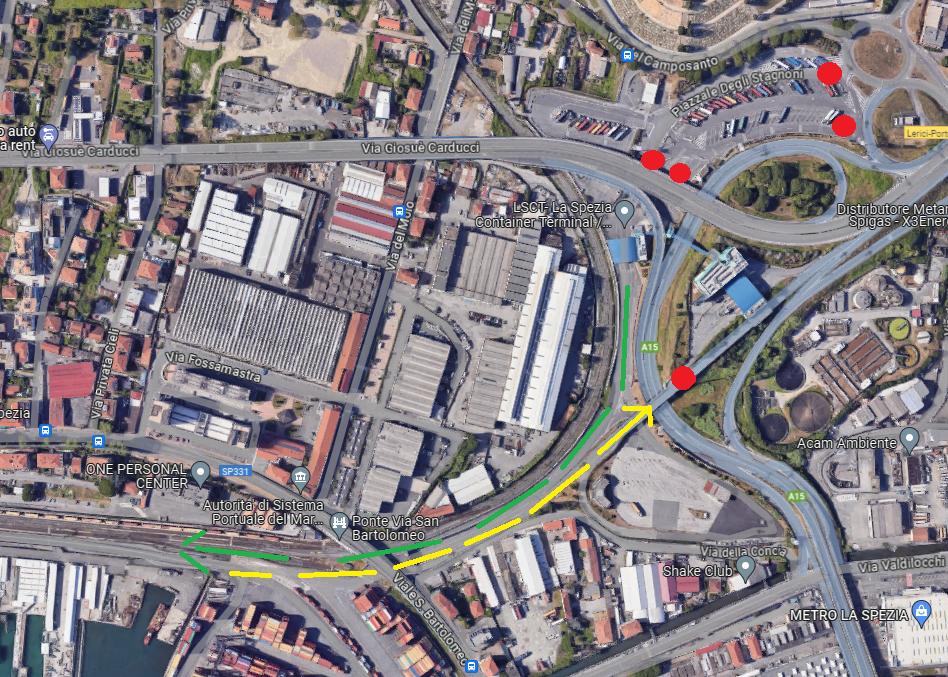
The implementation of the appointment system for trucks at the Port of La Spezia, developed within the framework of the MERIDIAN action and Task T5.05, demonstrates the effectiveness of an integrated ITS-based approach to port access management. The platform successfully addresses long-standing operational challenges related to congestion, fragmented information flows, and limited anticipation capabilities at the port entrance.
The work carried out across the different phases, from ITS architecture design, through integration with existing port IT systems, to pilot implementation and validation, confirms that the chosen federated and interoperable model is well suited to complex port environments. By preserving the roles and responsibilities of existing systems while enabling structured data exchange, the solution achieves tangible operational improvements without requiring disruptive changes to established processes.
A key outcome of the project is the transition from a reactive, presence-based management of truck access to a preventive and data-driven paradigm. The availability of pre-arrival notices and consolidated authorisation procedures allows stakeholders to act in advance, reducing uncertainty and inefficiencies at the gate. The integration with the Gate Operating System (GOS) further ensures traceability between planned missions and actual physical transits, enabling objective performance measurement through Level of Service indicators.
The pilot action has validated the technical robustness and operational reliability of the system in real conditions, enabling progressive scaling and the transition to extensive operational usage. Benefits have been observed across all stakeholder categories, including the Port Authority, road haulage companies, gate operators, and terminals, with positive impacts on efficiency, predictability, and service quality.
The appointment system implemented at the Port of La Spezia represents a mature and replicable solution that aligns with TEN-T objectives, sustainability goals, and the broader digitalisation strategies of European ports. It provides a solid foundation for future enhancements, wider stakeholder onboarding, and potential replication in other port nodes facing similar access and congestion challenges, thereby contributing to more resilient, efficient, and sustainable freight transport systems.